

Christians of the Nakba - Dbayeh Camp
On a hillside north of Beirut, overlooking the highway that runs towards Tripoli, stands one of the less familiar legacies of the Palestinian Nakba. Dbayeh is unusual among Lebanon's Palestinian refugee camps: it was established principally for Christian Palestinians driven from their homes during the 1948 Arab-Israeli war.
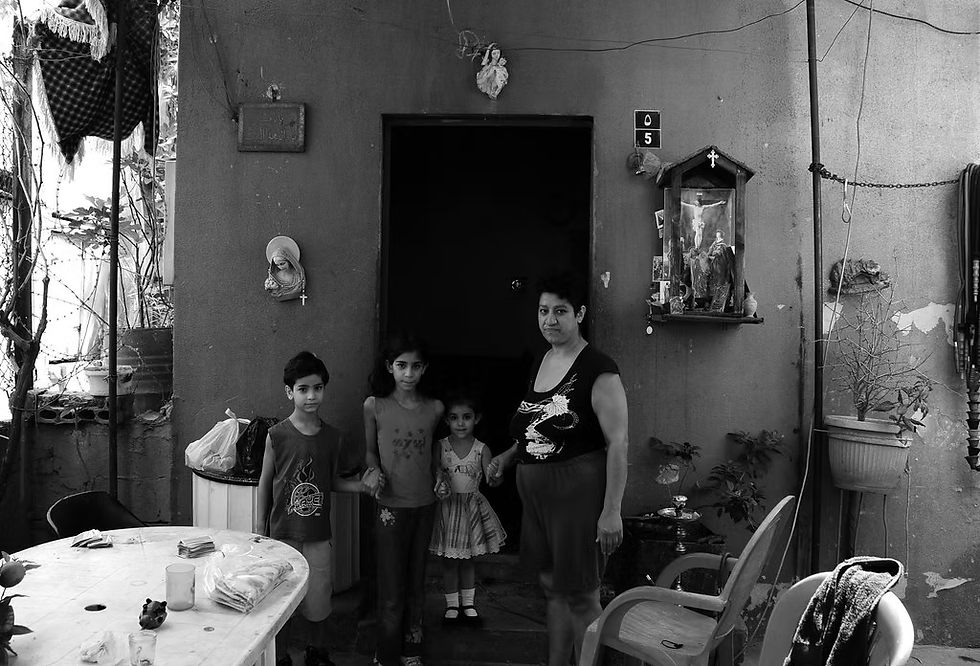
The camp's history speaks of the Palestinian Christian Nakba - of communities that had existed for centuries in Jerusalem, Galilee and the coastal cities that were uprooted in large numbers. Dbayeh makes that history visible.
It developed in the years following the 1948 exodus, initially with tents erected on land belonging to the Maronite monastery of Deir Mar Youssef. Christian churches and religious organisations played an important role in receiving Palestinian Christian refugees arriving in Lebanon. UNRWA subsequently developed the site into a formal refugee camp; its current profile dates Dbayeh's establishment to 1956 and says the land was rented from the monastery overlooking it.
The refugees did not arrive from nowhere. UNRWA identifies two Palestinian villages in particular as the places of origin of Dbayeh's refugees: al-Bassa and Kafr Bir'im, both in northern Galilee.
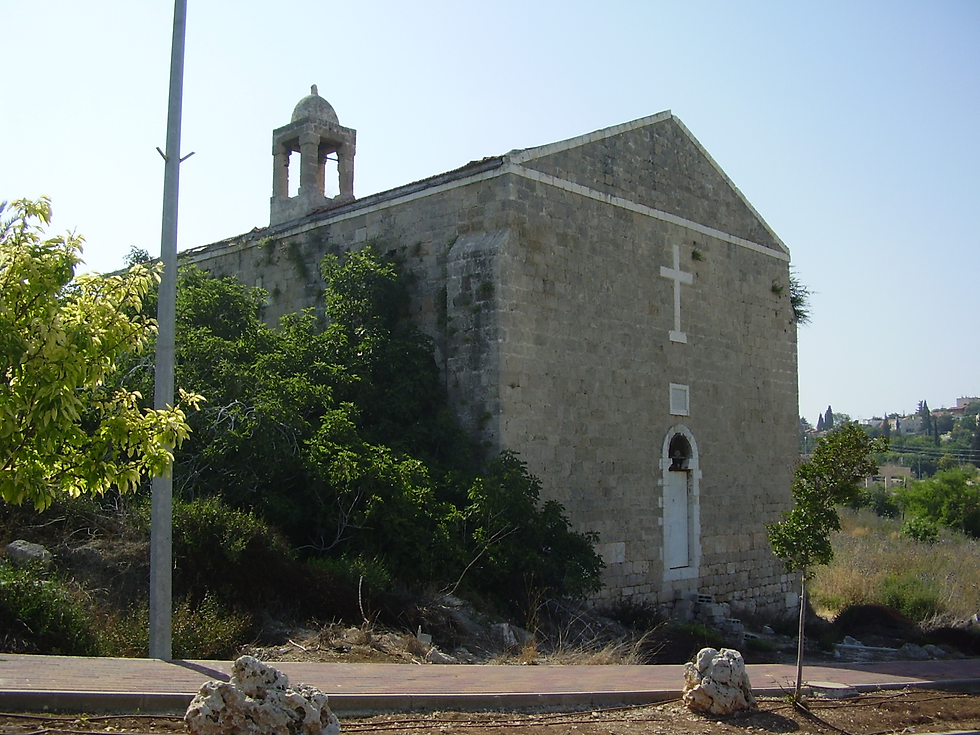
Al-Bassa, near Palestine's border with Lebanon and about 19 kilometres north of Acre, was no isolated hamlet. It was a prosperous and religiously mixed Palestinian town. British Mandate-era statistics for 1944–45 recorded 2,950 inhabitants in al-Bassa and neighbouring Khirbat Ma'sub: 1,590 Christians and 1,360 Muslims. The town contained churches, mosques and schools; its Christians included Melkite Greek Catholics and Greek Orthodox. By 1948 its population has been estimated at around 4,000.
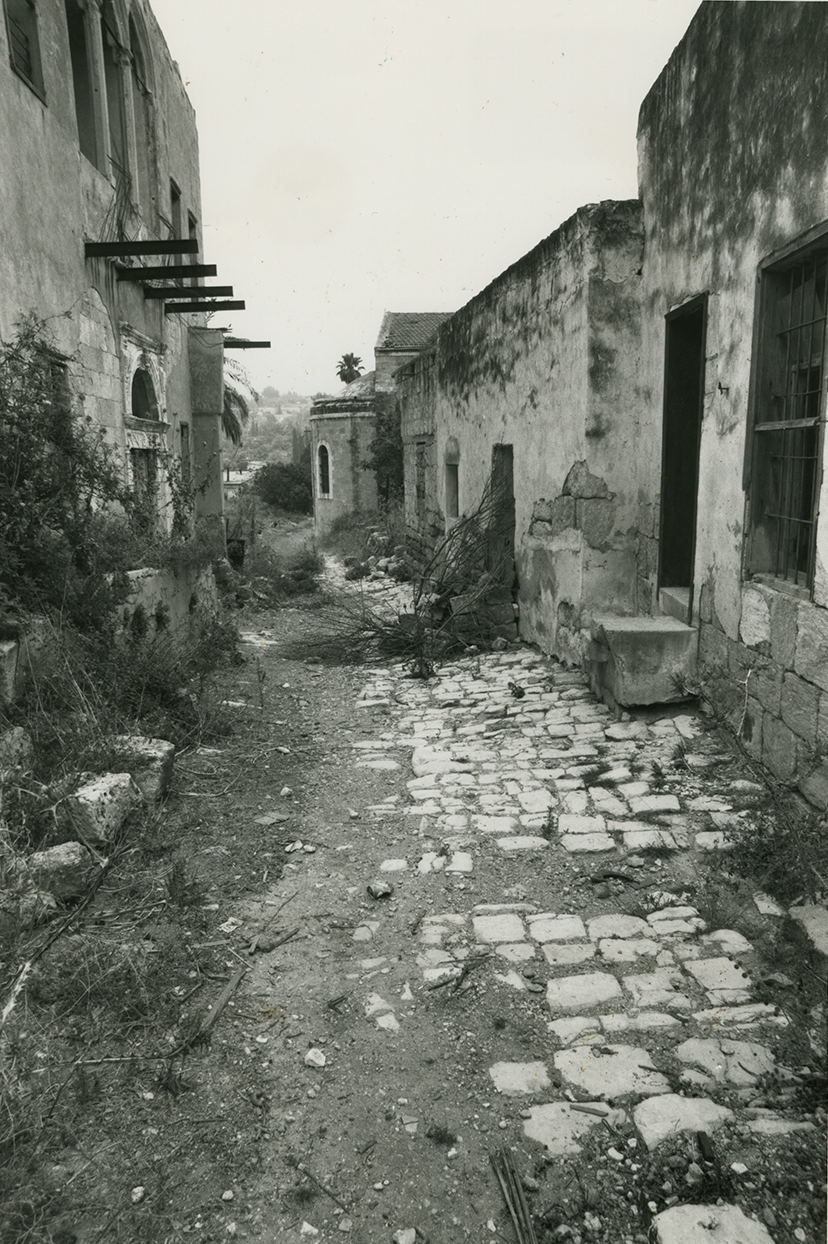
Al-Bassa was captured by Zionist forces during Operation Ben-Ami in May 1948. Accounts differ over the precise circumstances in which its inhabitants left. Palestinian eyewitness testimony collected by historian Nafez Nazzal described killings after the village's capture, while Israeli historian Benny Morris wrote that most inhabitants had already evacuated or fled during the assault and that some of those remaining were subsequently ordered or advised to go north into Lebanon. About one hundred inhabitants, predominantly elderly people and Christians, were instead transferred to the Palestinian village of al-Mazra'a.
For many of those who crossed the border, exile became permanent. Some of their descendants eventually made Dbayeh their home. Even decades later, research in the camp has found that the great majority of its Palestinian residents trace their ancestry to al-Bassa.
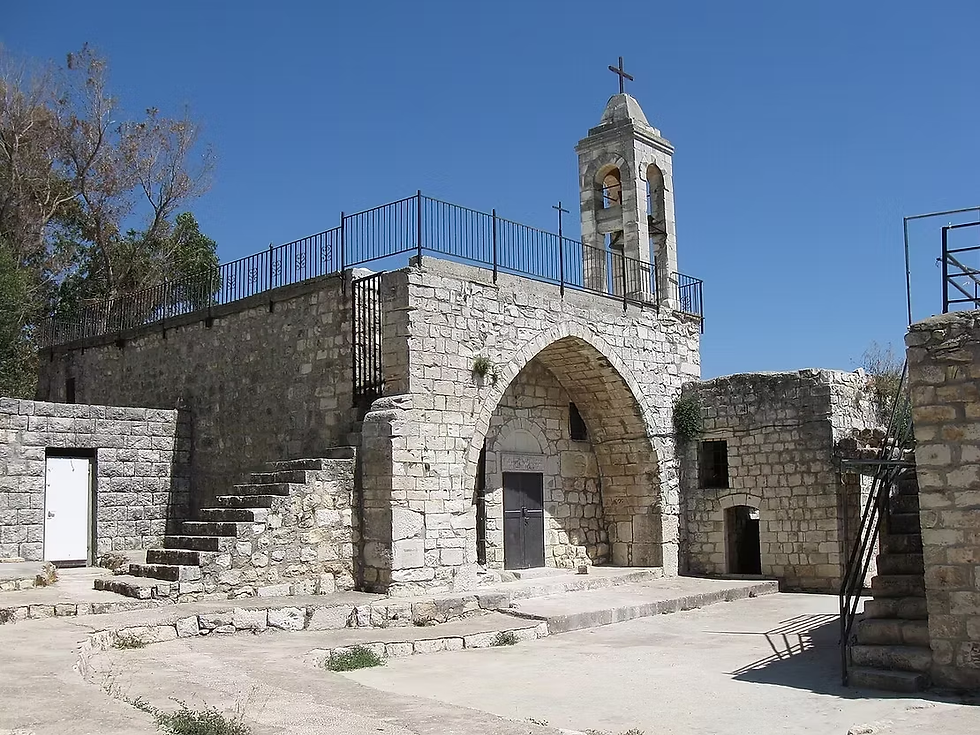
The other village closely associated with Dbayeh, Kafr Bir'im, was even more overwhelmingly Christian. Situated close to the Lebanese border in the Safad district, it had 710 inhabitants in 1944–45—approximately 700 Christians and ten Muslims. Its inhabitants cultivated olives, fruit and grain around a stone-built village whose religious heritage stretched back centuries.
Kafr Bir'im surrendered to Israeli forces during Operation Hiram in late October and early November 1948. Its residents were subsequently expelled from their village, officially on a temporary basis for security reasons. Some were pushed across the Lebanese border, while others remained displaced inside Israel.
People of Dbayeh
Their displacement acquired an additional significance because the villagers fought through the Israeli legal system to return. In 1952, Israel's Supreme Court ruled that there was no legal reason preventing their return. They nevertheless were not permitted to resettle Kafr Bir'im. In 1953, the Israeli military demolished much of the village. Its church survived and remains standing amid the ruins.
The histories of al-Bassa and Kafr Bir'im therefore converge on the hillside at Dbayeh. Families who had belonged to established Christian communities in Galilee found themselves living in temporary shelters on monastery land in Lebanon. What was conceived as temporary displacement hardened into decades of exile.
Dbayeh refugee camp in Lebanon
Dbayeh itself has changed. UNRWA recorded 4,636 registered persons associated with the camp as of December 2023, although it stresses that registration does not represent the number actually living there. Lebanon's 2017 census of Palestinian camps and gatherings counted only 1,772 residents at Dbayeh, including Palestinians, Lebanese and Syrians.
Yet the camp's significance is larger than its population. Dbayeh preserves a part of Palestinian history that can disappear from both popular narratives of Palestine and discussions of Middle Eastern Christianity. The refugees who arrived there were not foreign Christians caught accidentally in an Arab-Israeli conflict. They were Palestinian Christians whose villages, churches, farms and family histories were rooted in Galilee.
The surviving church at Kafr Bir'im, the remnants of al-Bassa and the refugee community at Dbayeh are therefore connected chapters of the same story: a Palestinian Christian society uprooted during the Nakba, carrying the memory of its villages across the border into Lebanon.


Comments